Sunday, March 27, 2011

Risk and Responsibility-EVMs

As we have seen with regard to our previous blogpost, where we studied the vision of science and technology since the 1930s, the major advances in technology were headed towards projecting the nation's sovereignty and military supremacy. But after the atomic bombing of Japan, the view of science changed dramatically; and one couldn't avoid the moral implications of the technology they mean to create. As we have have seen in our earliest blogpost, predicting the full extent of the social impact on a technological invention is impossible to predict. The Cold War didn't help in that respect, as it was just another excuse for each country to continue it's research on establishing their own supremacy. But, as engineers, we must take it upon ourselves to set a standard of ethics and model a society (as far as possible) with the inclusion of the technological enhancement, and see what pops up. Every piece of technology has it's risks, and we Engineers must take the responsibility to alter the invention in mind appropriately so that the society could cope with the demons that it brings with it.

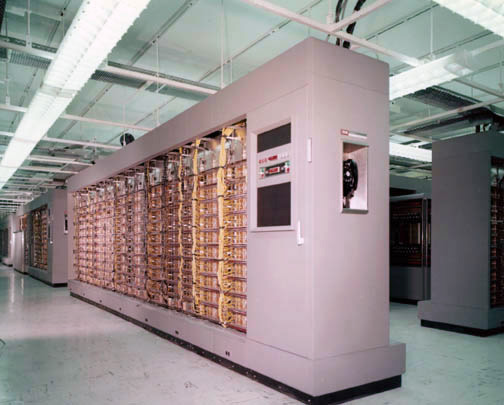
Let us take an example in the Electronic Voting Machines. The US came up with the 'then' supercomputer ENIAC, which was the precursor to the computer chips responsible for the drive of computerizing every aspect of the society. The Election Commission of India has officially declared that elections, from now on, shall be done electronically. But there are many risks to the introduction of this technology in the election system. The chip which has the counter coded within it is unreadable and it would be impossible to tell if the manufacturer has other plans in mind. It has also been proven that it is possible to rig the displays, immaterial of which candidate has won. It is also proven possible that the results can be rigged using a bluetooth device that can be slipped into the machine. On the whole the machine has a lot of openings. Sources say that there might exist as many as a million people in India who have the technical know-how of rigging these EVMs.

But now we need to ask ourselves:- how do alter the machines to avoid it getting rigged? What is the alternative to EVMs, and would it tackle the issues at hand? Consider the paper ballot system. It's functioning is better understood than the EVMs and the set of people who have the technical know-how to alter the election results are a lot larger than in case of the EVMs. As for solutions to the problems posted by the EVMs, a few ideas come to mind; but they make the system more complex, and if ever the elections are then rigged it would be impossible to tell.

But on weighing the options, I personally feel  the EVMs would make a better system for elections rather than the paper ballot system. But we engineers must continue to strive to make the system fool-proof.

-Amit M Warrier
EE09B004

References:-
1) The Risk Digest

Risks, Responsiblities and the Cold War

Introduction:
The Cold War was a period of military tension, mistrust and general paranoia in both the USA and the USSR. An arms race resulted in the stocking up of nuclear warheads and the threat of "mutually assured destruction" was guaranteed by both sides. As a result, the American Government funded Project Whirlwind in the MIT and created the SAGE perimeter defense system. According to Paul Edwards in his essay on 'Computers and Society', the value of the SAGE project was almost entirely imaginary and ideological. Though its military potential was minimal, it helped create a sense of active defense to assuage some of the helpless passivity of nuclear fear. Such justifications were also common during this period in collaborations between scientists at various educational institutions and the military. In a process of 'mutual orientation', engineers constructed visions of military uses of computers they wanted to build in order to justify grant applications. We notice that in both the above examples, the entire truth was not let out. Does something 'smell' here?

Through a glimpse into the process of possible electoral fraud, I will try to explain some of the risks and responsibilities associated with such justifications.

Electronic Voting - A Look at the Risks:
Most people consider electronic voting to be simply an automated process where votes can easily be processed and counted to produce a result. In this naive view, electronic voting, or e-voting, is simply a faster and more accurate method of traditional voting. This view however, is flawed, and electronic voting machines can easily be hacked into and tampered with. According to some, e-voting unnecessarily introduces a third party into the picture, a separation where the voter cannot directly see whether the vote he has provided has been recorded. Several voters consider this practice of handing over their ballot paper to an intermediate as unacceptable, since it violates the very nature of the 'secret ballot'. An electronic voting system can be involved in any one of a number of steps in the setup, distributing, voting, collecting, and counting of ballots. Possible electronic or algorithmic errors at any of these stages may be a weakness for a hacker to exploit. What's worse, under a secret ballot system, there is no known input, nor any expected output with which to compare electoral results. Hence, electronic electoral results and thus the accuracy, honesty and security of the entire electronic system cannot be verified by humans.

Responsibilities and Professional Ethics:
If there is a risk associated with the usage of a particular technology, there is a corresponding responsiblity associated with its engineer or manufacturer. Producers of electronic voting machines in the US, however, continue to make defective machines, resulting in several electoral frauds in the USA - most notably in the 2000 presidential elections. Here, both the producers and the government are guilty of violating their professional ethics in popularizing such voting machines. In the case of the SAGE defense system, the governement did not let out the whole truth and misled its citizens. Obviously, this was done for their 'greater good', since revealing their objective would spoil the effectiveness of the program. Here, we see that there are shades of grey separating the ethical from the unethical.

Conclusion:
The process for computerized warfare developed in result of a perceived threat to security during the Cold War period. Several new technologies emerged such as digital computers, hydrogen bombs, and automated defense systems. With great power however, comes great responsibility and the creators of such technology have responsibilities to its users. A professional must have his or her own self enforced code of ethics which they will follow at all times. As a thumb rule, we may use some of the tests suggested in class - to not do anything that makes us uncomfortable or 'smells'.

References:
[1] http://en.wikipedia.org/wiki/Electronic_voting
[2] http://catless.ncl.ac.uk/risks
[3] Article by Paul Edwards titled 'Computers and Society'

Saturday, March 26, 2011

Role of technology in cold war and similar risks and responsibilities involved in present day processes (Electronic voting to be particular)

Introduction
     The Cold War was a period in which the world saw many advanced and technologies emerging. The point to note about these technological marvels is that the amount of money involved in them is enormous (sometimes outrageous).

     Take the SAGE perimeter defense system for example. The value of the SAGE project was almost entirely imaginary and ideological. Though its military potential was minimal, it helped create a sense of active defense to assuage some of the helpless passivity of nuclear fear. Such justifications were also common during this period in collaborations between scientists at various educational institutions and the military. In a process of 'mutual orientation', engineers constructed visions of military uses of computers they wanted to build in order to justify grant applications. We notice that in both the above examples, the entire truth was not let out.


Risks involved in Electronic Voting
Can we trust these?
      Electronic voting machines can easily be hacked into and tampered with. The biggest flaw in EVMs is that it introduces a third party into the picture, and there is no way in which a voter can verify that his vote has really been cast. This practice of handing over ballot paper to an intermediate is simly unacceptable, since it violates the very nature of the 'secret ballot'. An electronic voting system can be involved in any one of a number of steps in the setup, distributing, voting, collecting, and counting of ballots. Possible electronic or algorithmic errors at any of these stages may be a weakness for a hacker to exploit. What's worse, under a secret ballot system, there is no known input, nor any expected output with which to compare electoral results. Hence, electronic electoral results and thus the accuracy, honesty and security of the entire electronic system cannot be verified by humans.

Responsibilites
       Where there is a risk, there is a corresponding responsibility associated with the maker of the technology. Producers of electronic voting machines in the US, however, continue to make defective machines, resulting in several electoral frauds in the USA - most notably in the 2000 presidential elections. Here, both the producers and the government are guilty of violating their professional ethics in popularizing such voting machines.
       Coming back to the context of Cold War, in the case of the SAGE defense system, the government did not let out the whole truth and misled its citizens. Obviously, this was done for their 'greater good', since revealing their objective would spoil the effectiveness of the program. Here, the question of the boundary between ethical and unethical comes into picture.

Conclusion
        The process for computerized warfare developed in result of a perceived threat to security during the Cold War period. Several new technologies emerged such as digital computers, hydrogen bombs, and automated defense systems. With great power however, comes great responsibility and the creators of such technology have responsibilities to its users. A professional must have his or her own self enforced code of ethics which they will follow at all times. As a thumb rule, we may use some of the tests suggested in class - to not do anything that makes us uncomfortable or 'smells'.

References
  1. The Risks Digest
  2. From “Impact” to Social Process: Computers in Society and Culture by Paul Edwards
  3. An Unforseen Revolution: Computers and Expectations, 1935 - 1985 by Paul Ceruzzi

Friday, March 18, 2011

THE VISION FOR SCIENCE AND WAR IN THE 1930s AND THE CURRENT SITUATION:-


Science and technology came to the fore during the Renaissance period, a period which saw massive attempts at the colonization of the lesser world. Even though emphasis was still given to knowledge and understanding of the world around us and to make the lives of people more comfortable, technological advances were made to exercise the sovereignty of nation-states over the rest of the world. With the onset of World war I, it became necessary to gain an upper-hand over the enemy, technologically. This period, from the early 1930s until the end of the cold war, saw massive strides in both science and technology with regard to the research approach. Scientists were encouraged to conduct research in any field, but the applications of these scientific discoveries were thought up and created with the sole and supreme aim of projecting the country's sovereignty and military might.

One such approach to war was 'Cybernetics'. The term was coined by Norbert Wiener, a Professor at MIT, who was also responsible for the design of the anti-aircraft guns that were used by the US during World War II. The concept of 'Cybernetics' is based on the concept of Feedback. The result of the use of Cybernetics on technology is a tool that is empowered with senses, or ports for information input, and takes a course of action accordingly. For example, the anti-aircraft guns designed by Wiener used a certain model of flight patterns of the enemy, combined with senses that observe the target, to predict the motion of aircrafts and gun them down. Cybernetics derives it's roots from nature, wherein all organisms function on a feedback-reward system. The concept of Artificial Intelligence was also born from Wiener's Idea. The core of Cybernetics lies in the accuracy with which the objects of interest, which in the case of Wiener's guns are the enemy aircrafts, can be modeled.

But the outlook towards science and technology changed dramatically following the atomic bombing of a Japan, the event that marked the end of the World War and the start of the Cold War. Even though the arms race was still existent in the world, it was now impossible to view technological development without studying it's moral implications. Weapons that cause a lot more damage than that which was caused in Japan, also exist in this world; but the intention is peaceful as these weapons act as a deterrent to war. The technology used to fight wars were modified appropriately to be used commercially. Once again the focus of science and technology was shifted back to what it was before World War I, to make the lives of people more comfortable.

-Amit M Warrier
EE09B004

References:-
  1. The Class ppt.

The vision for war – from the 1930’s to now

The vision for science and war seems to have undergone a radical change from the 1930’s to the present. This change, pioneered by MIT applied mathematician Norbert Wiener, has essentially got to do with the introduction of cybernetics and its applications to war, thereby securing the crucial marriage between science and War, which was previously absent. This resulted in the battle being between machines acting like humans rather than human soldiers themselves. Let me explain.


Norbert Wiener, regarded by many as the father of cybernetics, introduced the idea of Cybernetics, or, the “science of control and regulation,” during the time he worked for the US defence in developing the radar-guided AA (anti-aircraft) gun. He studied the predictable behaviour of the human mind in stressed situations to help predict the path of the enemy aircraft, so that it could be gunned down efficiently. The most important aspect of this was the feedback loop running between the enemy pilot, the aircraft, the AA predictor and the AA operator. The actions of each member of the loop regulated the actions of the subsequent member of the loop. This allowed the replacement of man by machine and machine by man. The actions of the pilot, for example, could be predicted by a machine; hence the pilot was being viewed not as a human being with emotions and senses, but as a machine whose actions were predictable and somewhat pre-determined.
Thus, the use of cybernetics in warfare had one important result that would determine the vision for war in decades to come: scientific research would extensively be used in warfare and technology would become the single most crucial factor in determining victory in war. This was realised early on by Vannevar Bush, a visionary who united six thousand leading American scientists and coordinated their research in warfare. As the head of the Manhattan Project that developed the atomic bomb, he knew the importance of technology in warfare and this was what made him seek government funding in scientific research for warfare, which, when also adopted by nations worldwide, changed the war scenario. A battle between skilled human soldiers (1930’s) changed to a battle between intelligent machines.

Therefore, the change in warfare that we see from the 1930’s to now, most importantly, is the advent of technology in the warfare realm and the criterion for victory changing from skill, strength and size to technological advancement.


By Pranav R Kamat


References:
1. The Ontology of the Enemy: Norbert Wiener and the Cybernetic Vision by Peter Galison
2. The History and Development of Cybernetics - Presented by The George Washington University in Cooperation with The American Society for Cybernetics

Thursday, March 17, 2011

What was the vision for science and War in the 1930's. Have things changed since then?

During the “Enlightenment” the period between 16th and 17th centuries when philosophers celebrated the power of human reason. There were new techniques of science and mathematics which started play a role in making human activities much more easy and productive. Science and technology were looked at as highest order of learning and civilization. Working with science was looked at as constructive and noble job. Today science and technology is for mass destruction. In this blog post I will try to show the changing face of science over the years.

Though science was meant for human development is has been adapted and modified and for destructive purposes like war since ages. Archimedes ancient Greek mathematician, philosopher who is famous for his varies contributions to early mathematics, formalized a method to setting enemy ships on fire using sunlight . In 17th century French military under Napoleon Bonaparte started adapting mathematical techniques in designing fortress to measuring the size of cannon balls. Though these examples show the early adaptations of science, they were of little impact on determining the outcome of a war. This was situation until the beginning of 20th century.

It was in world war I that countries realized the potential of science in war. World war I was often referred as the 'The Chemists' war' because of the extensive use of chemicals like nitrites, poison gas. Germans used chlorine from from powerful die industries. Realizing the potential of these chemicals, chemists from these countries were pushed to develop more harmful chemicals to countermeasure the chemicals from the other country. Physicist contributed by developing wireless communication technologies and sound-based methods of detecting U boats. This marked beginning of the scientific research dedicated for war.

At the end of the first world war the nations realized the significance of science and technology in war. Until this time there was just adaptations of existing scientific and technology in war and the scientific research was meant to development. The inter-war years mark the change in the face of science. The purpose of science started transforming from 'human development' to 'human destruction'. Governments started funding the research which had a potential in war. For example in US until then academic research in science and engineering is not considered a federal responsibility; almost all support comes from private contributions and charitable foundations and military research was heavily disorganized. In the inter-war It was reorganized and was heavily funded by the government one of it being the Manhattan project.

The view of war has changed from a mode on 'settlement of issues' to mad race of destruction. There was disappearance of understanding of a human life among the scientist developing technologies. Some technologies like atom bomb were developed that could wipe-out an entire city in seconds. It can be compared to the chemicals that were developed were to mass kill mosquitoes, they made such chemical because we don't value a life of a mosquito. An atom bomb was no different. Many new mathematical and computational tools like 'game theory' , 'operational research' were developed ,all for the purpose of enhancing defense system. British and American work on radar influenced to course of the war.

After the second world war, he advent of the Cold War solidified the links between military institutions and academic science. Whole new field like digital computing and networking were developed under the military patronage.

The extensive military patronage since 1930 changed the face and vision of science. Like Paul Forman an American historian in his 1987 article “Behind quantum electronics: National security as a basis for physical research in the United State, 1940-1960,” said military funding initiated "a qualitative change in its(science) purposes and character."

References:

- Sujan

The vision for science and War in the 1930's and the current situation.

      In this essay, I explore the relation of science with war in the 30s and the vision about science as conceived by visionaries like Vannevar Bush.

Science before the war
      The very meaning of the word science is "to know". Scientists were driven by the desire to explore the laws of nature and to deepen the human knowledge and understanding. All the scientific research was geared towards one goal - the betterment of human-kind. Most of the research was done for the intellectual satisfaction gained out of it.

Impact of the war
       In first world war, the very notion of science changed. The roadmap of science and technology was given a sharp turn in the 30s. Knowledge no longer remained the only motivation for for science. Technologies were developed to win the war, kill the enemy, and not for the greater good of mankind. The very foundations on which science was based, were shaken.
       The WW I was considered to be "war of chemists" where chemicals were employed for mass destruction. 1930s was the period when a lot of new technologies emerged, not due to the usual drive for the betterment of man, but through the insane drive to vanquish the enemy and the brutal urge to wipe them out.


Cybernetics
       Cybernetics is an example of one such branch of science. It was literally born out of war. It had many fundamentally revolutionary ideas at its root. The main concept behind it was that under extreme conditions like very high altitude, high mental tension and high speed aircraft manipulation, rather than fully processing the situation and then taking the decision, human mind behaves mechanically. This understanding paved the way to model human mind mathematically (at least in extreme situations). Then followed extensive research and result was high precision anti aircraft guns!
        Unlike many other technologies which were invented without war in mind, but proved to be very useful in the war, cybernetics was one which was invented keeping the war in mind, and then after war, it found applications in other fields.


Bush's vision for science
        Bush rightly envisioned that the sheer amount of knowledge being produced by rapid development will change the methods of acquisition and storage. And accordingly he developed, or at least paved a way to develop these technologies. He predicted that traditional methods of acquisition and storage were not enough for this explosion of information.


Where do we stand now
       After the end of cold war, once again we are back to the time when science is done for development's sake rather than for destruction.
       Many technologies which were war specific have been turned upside down for the greater good. For example, U.S. used the technology captured from German rocket scientists to send men on moon, and in general, take the first step of man towards space exploration. The satellite technology which was originated from the need to spy on the enemy without being easily spotted, is now used for communication and networking.
       Bush's vision has come true and we have been able to cope up with the "information overload" which he predicted. In the form of world wide web, we have achieved the goal of efficient mechanism for storage and acquisition of knowledge. 

References
  1. The Ontology of the Enemy: Norbert Wiener
  2. Cybernetic Vision : Peter Galison
  3. The History and Development of Cybernetics : The George Washington University
  4. Wikipedia